University of PennsylvaniaManagement & Technology Summer Institute · Summer 2026
M&TSI
Build the technology.
Make it matter.
My exploration of engineering, entrepreneurship, and lasting social impact.01 / The program / University of Pennsylvania
Technology. Business. A wider purpose.
Engineering and business in the same classroom.
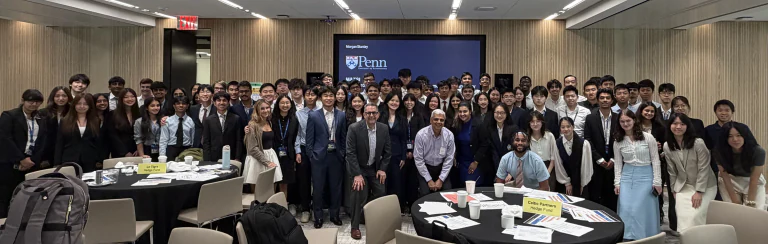
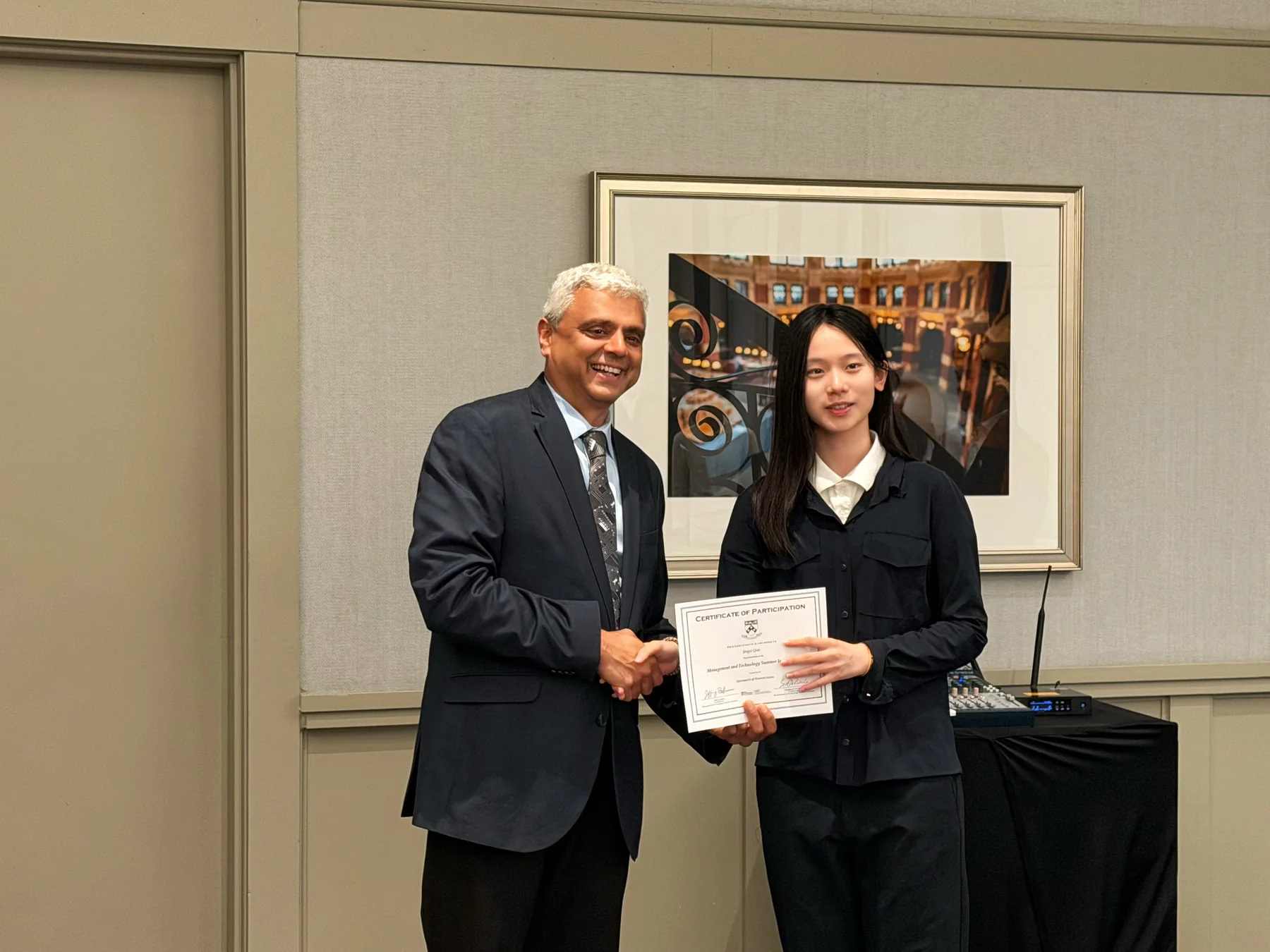
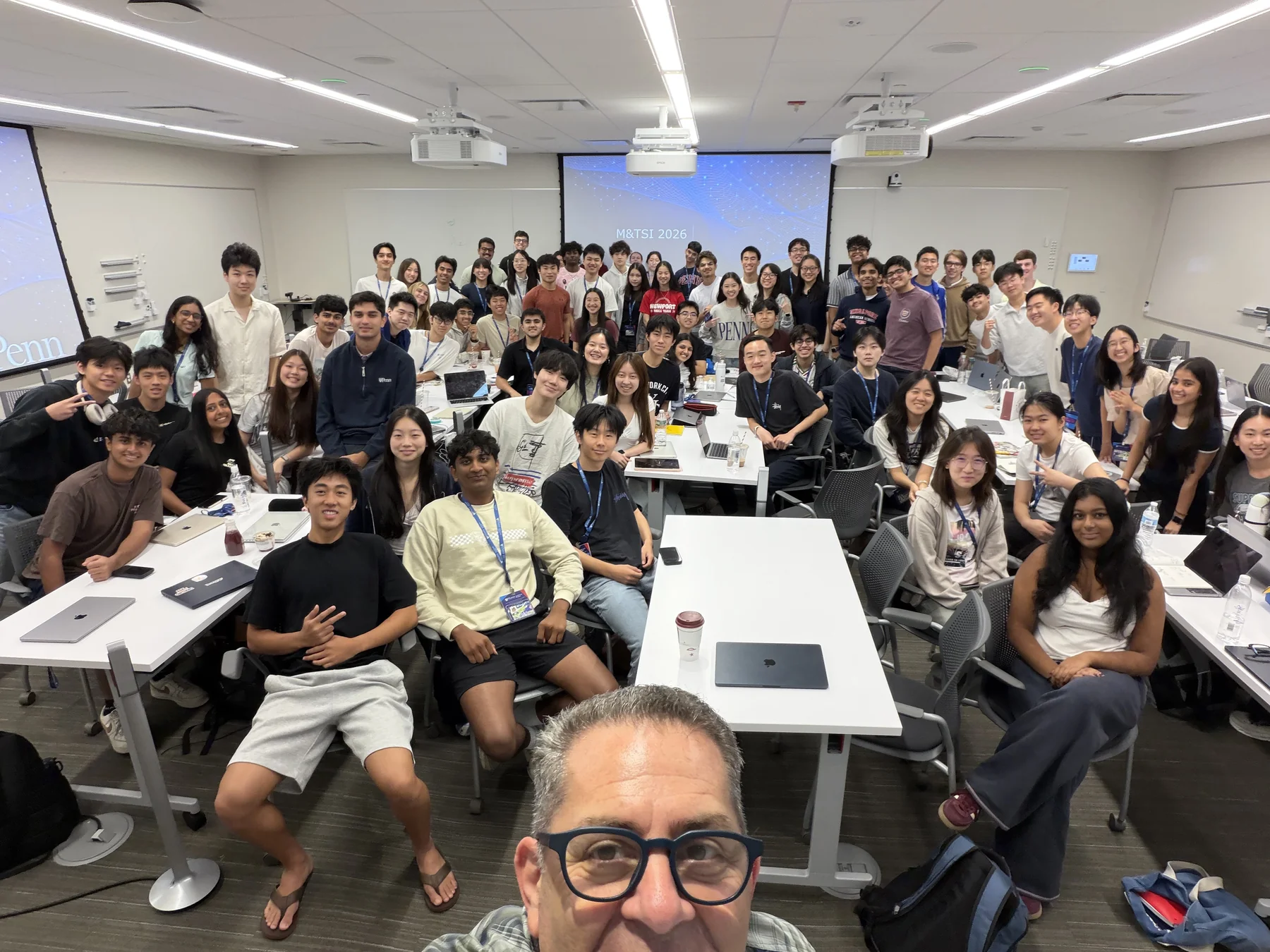
I joined Penn’s Management & Technology Summer Institute as one of 75 students from around the world. The three-week program at the University of Pennsylvania combined engineering and product development with entrepreneurship, finance, marketing, and technology strategy.
Labs ran alongside quizzes, case studies, financial modeling, and business simulations. Moving between them meant explaining a decision as carefully as building a working system: what problem did it solve, who would use it, and what would make it sustainable?
My water-purifier project had already led me to connect an engineering solution with the people it could serve and a business model that could support it. M&TSI gave me a more structured way to test those connections, from understanding customers and revising a prototype to planning how a product could reach them.
Creating Mirra as a five-person team.
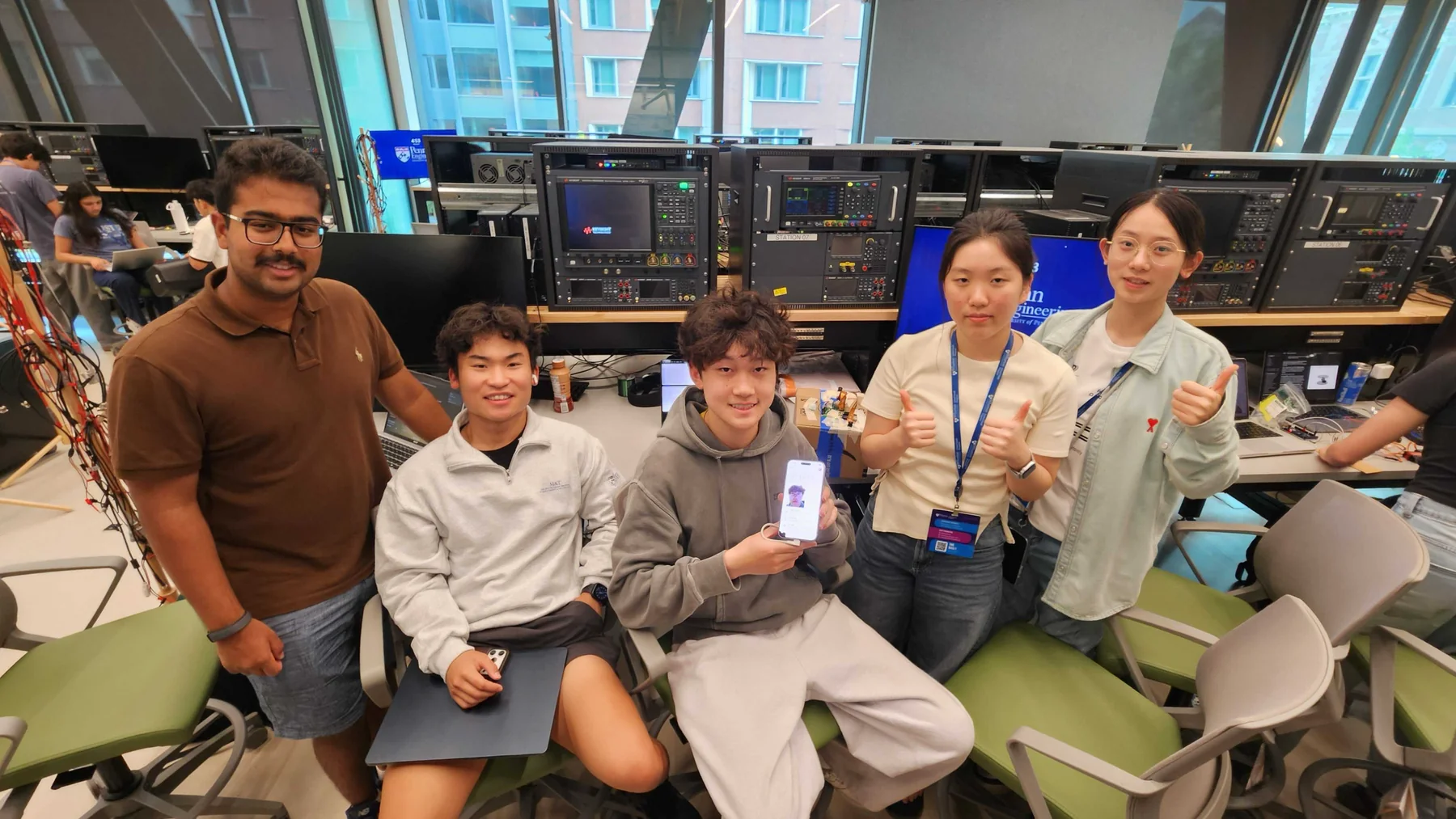
As a core member of our five-person Mirra team, I worked alongside Dirac Ge, Jimin Kim, Arush Mitra, and Leo Ueno. In a week and a half, we took an AI wellness-mirror concept from an idea to a working prototype, bringing hardware, image capture, and customer research into the same development process.
I contributed to business strategy, the five-year financial model, and the go-to-market plan. These decisions developed with the team: what we learned from potential customers informed the product, while the prototype helped us ask more concrete questions about its value.
That exchange became a defining part of the program for me. A technical problem could reveal a question about the user; a business discussion could send us back to the design.
- 75 students
- Global cohort
- 3 weeks
- Engineering and entrepreneurship
- 5-person team
- Mirra final project
02 / Engineering projects / Learning through making
Small builds. A stronger foundation.
The engineering labs made the course concepts tangible. They also demanded quick iteration: when a first attempt failed, we had to use the result to decide what to inspect next. Comparing approaches with classmates helped turn an unsuccessful experiment into a more precise question.
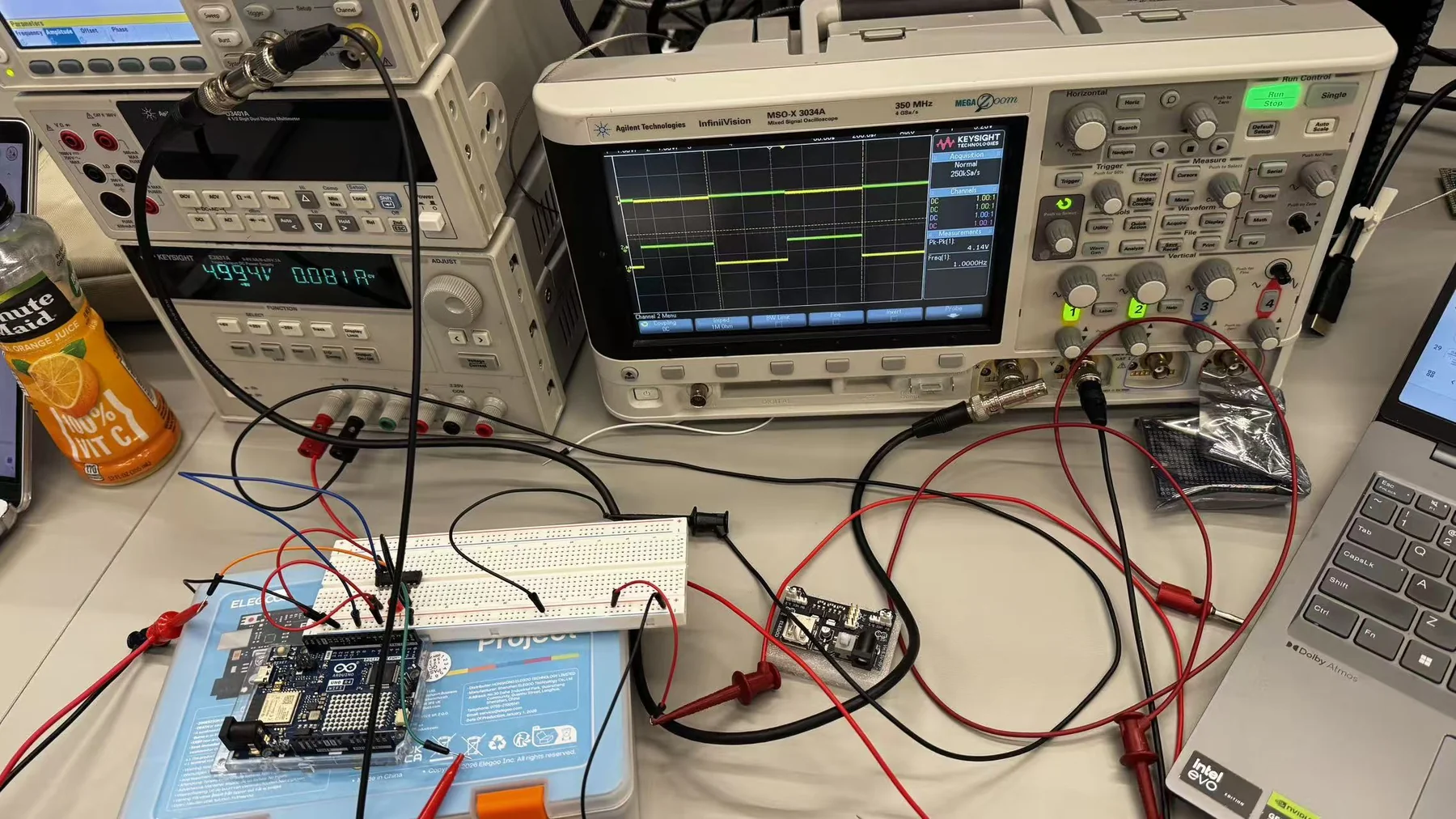
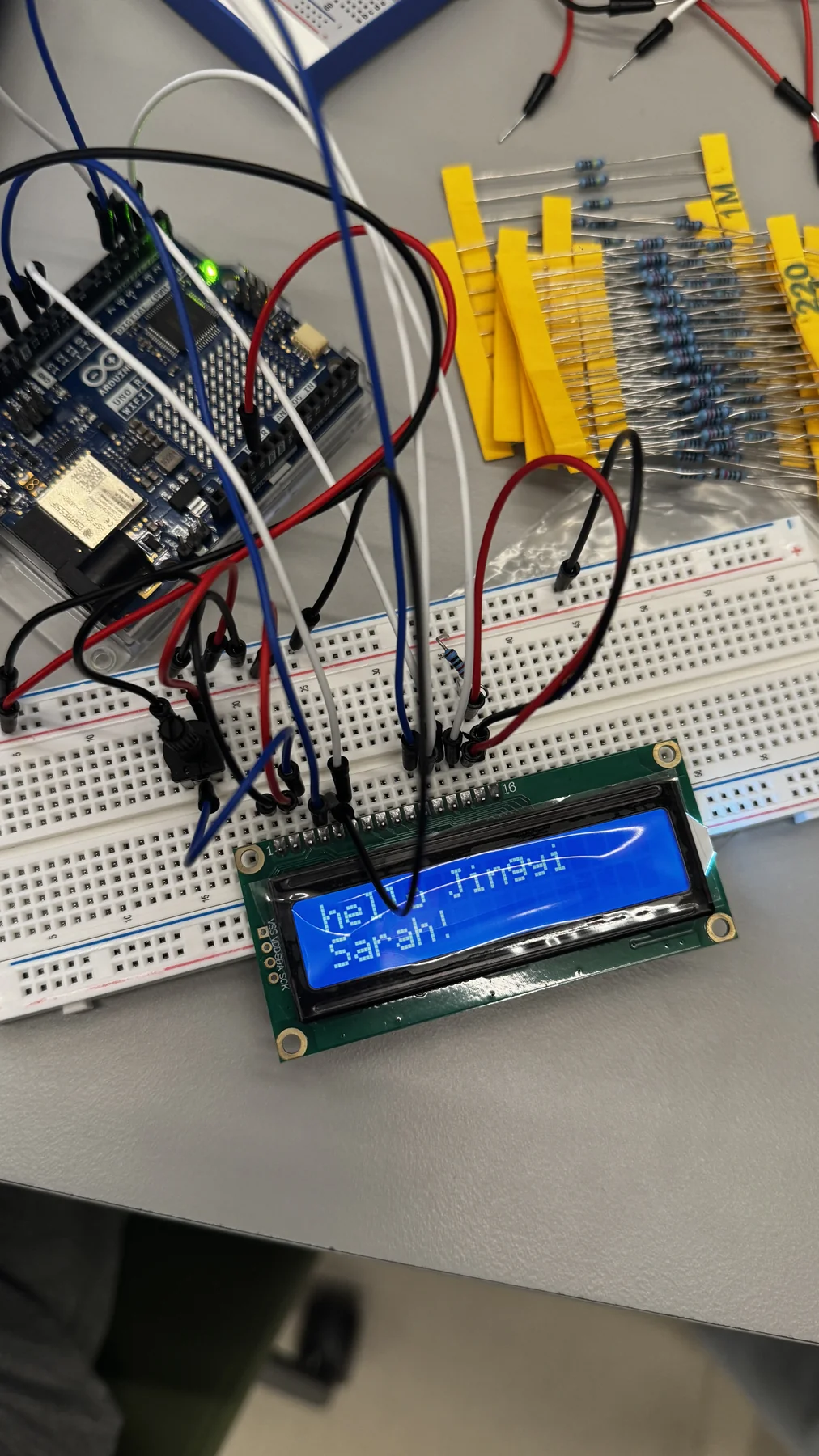
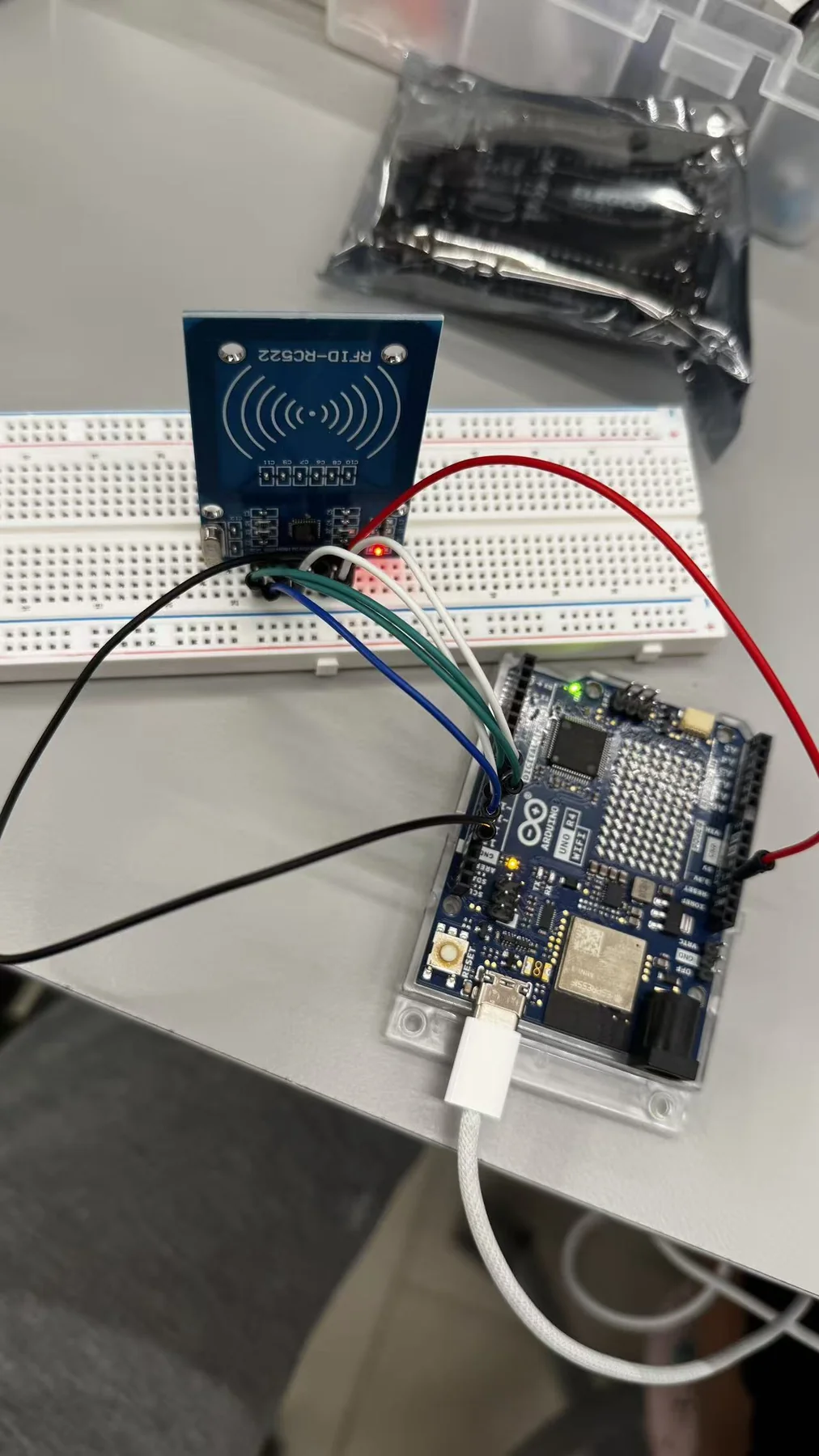
Read the circuit before changing the code.
An oscilloscope made the circuit’s output visible; an LCD translated program behavior into feedback I could read. Looking at the signal alongside the code helped me distinguish what I expected the system to do from what it was actually doing.
Connecting an RFID reader extended that relationship from a physical input to a digital event. The useful question was no longer simply whether the circuit worked, but where the input, wiring, and program agreed—or where they stopped agreeing.
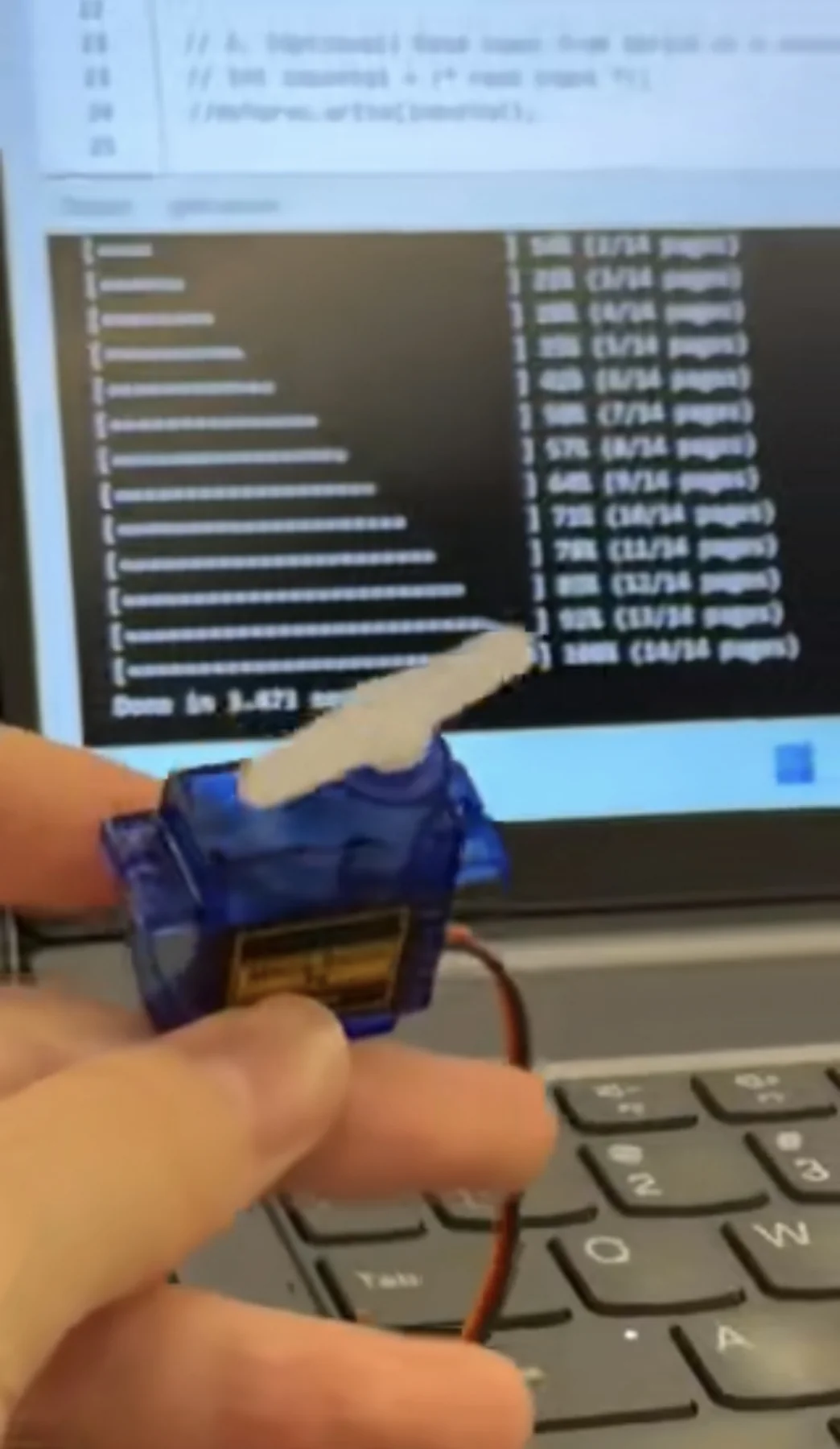
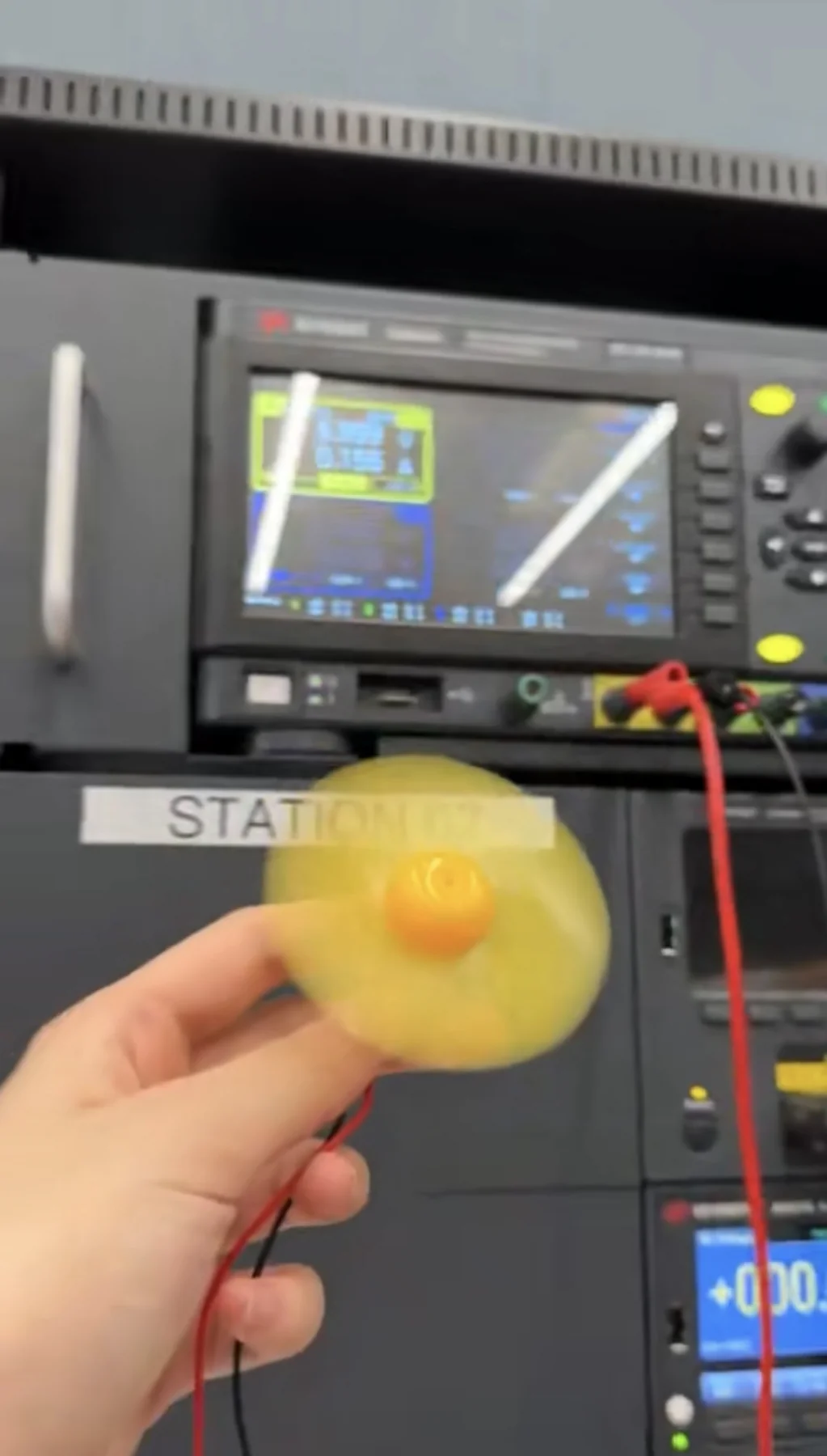
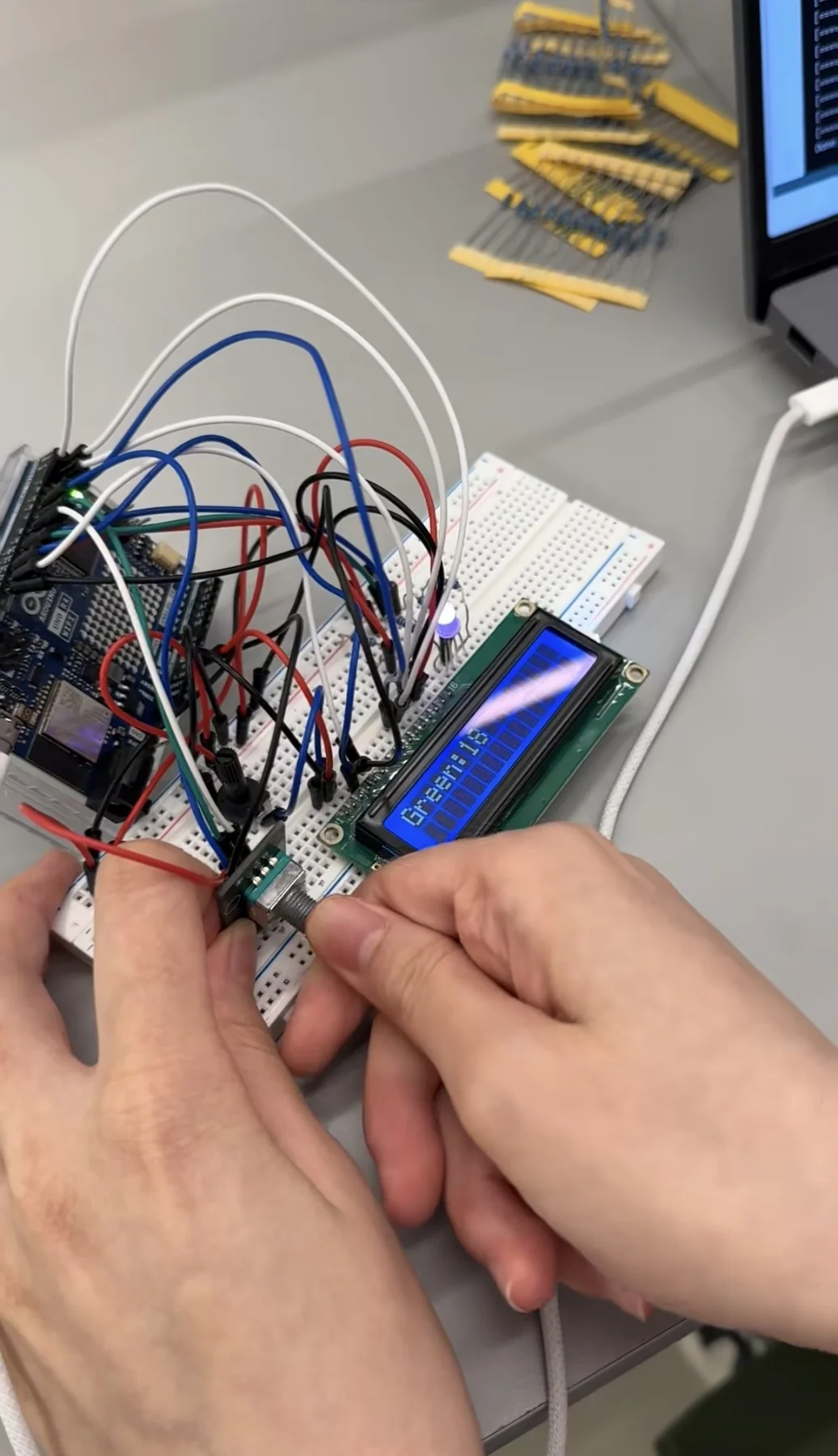
Turn an instruction into movement.
Working with motors and servos connected code to a physical response. I moved between the control program, the wiring, and the measured signal to understand how those layers worked together.
These exercises established a habit I carried into the car project: observe the response, isolate the part that needs attention, and change the system with a specific question in mind. A motor’s movement made the consequences of a coding or wiring decision immediately visible.
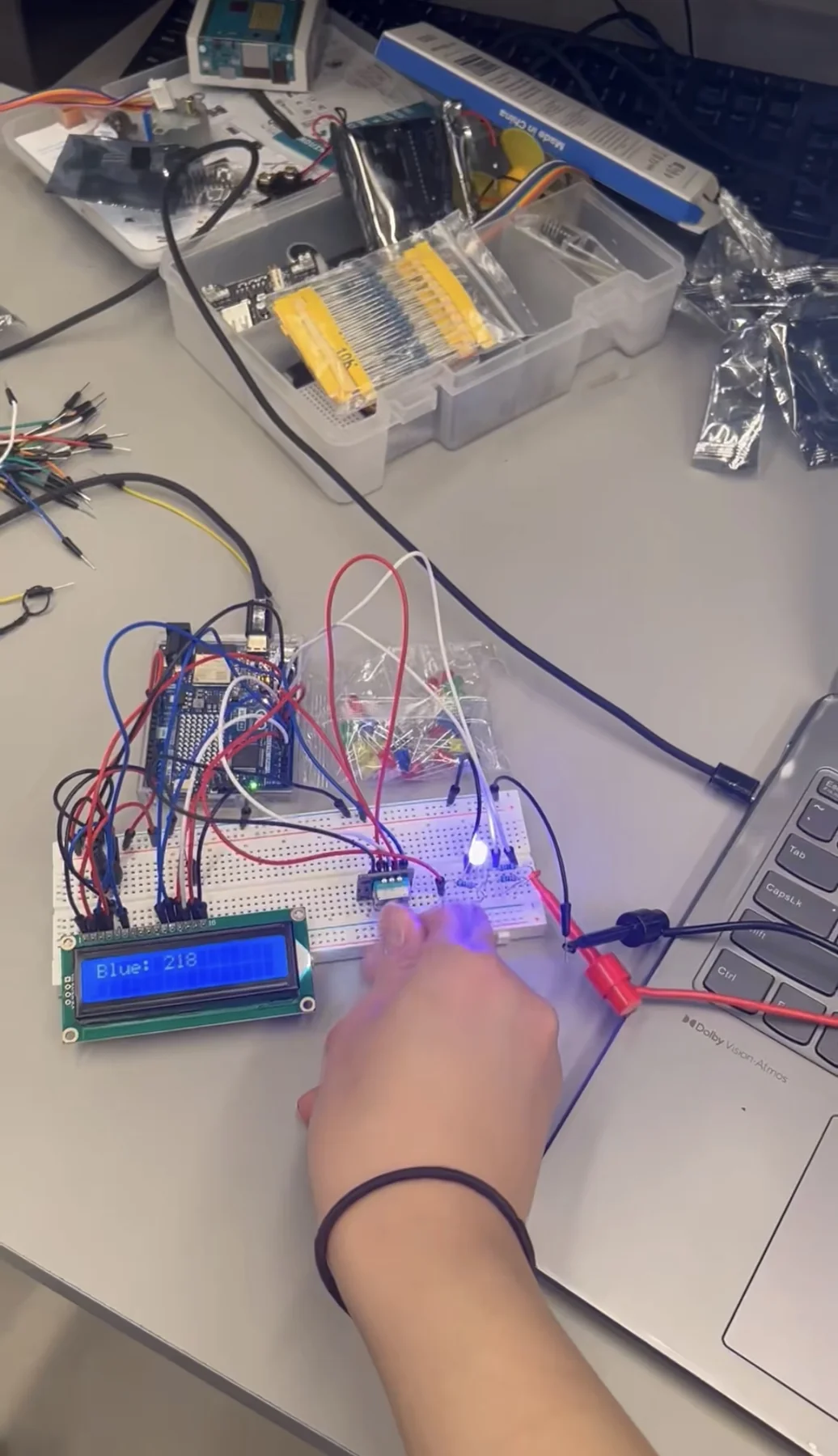
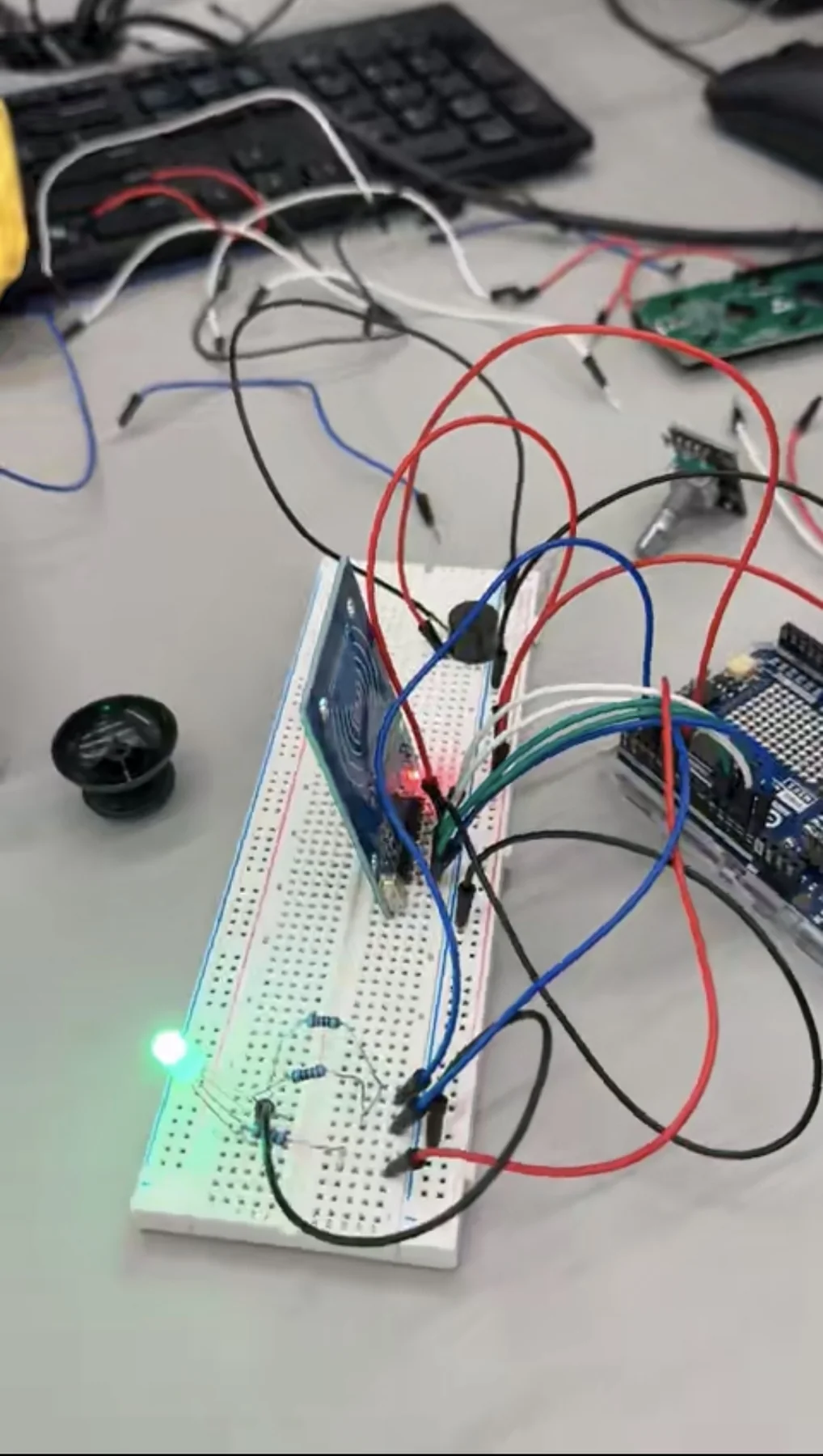
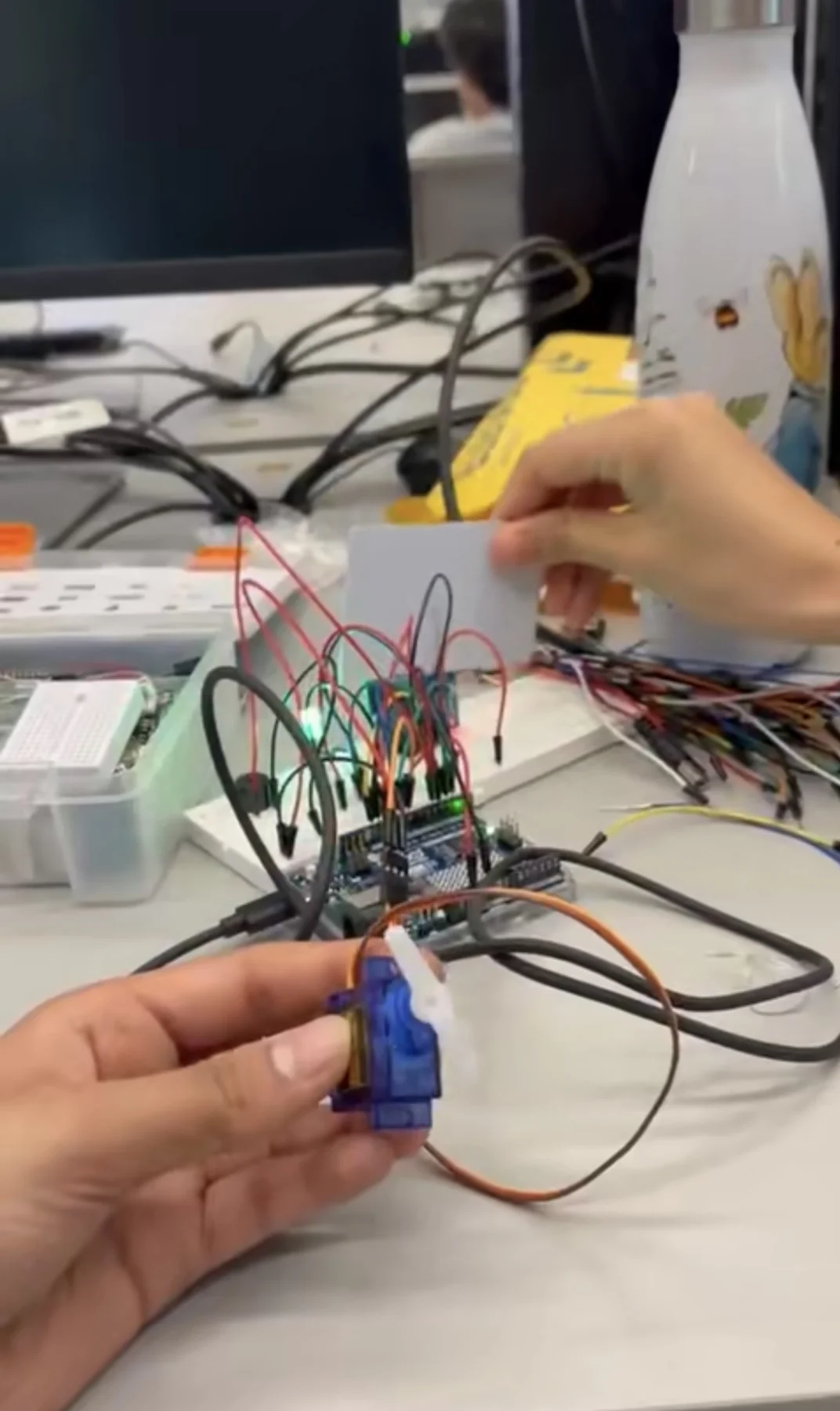
Give every experiment a visible response.
An illuminated LED, a changing display, or a moving actuator made a test result tangible. Combining those components meant checking both the individual parts and the connections between them.
The larger projects built on this process. Reliable behavior depended on the connections between components, and explaining a test to someone else helped clarify what the result did—and did not—show.
03 / Physical AI / PiRacer
Learning does not stop at the model.
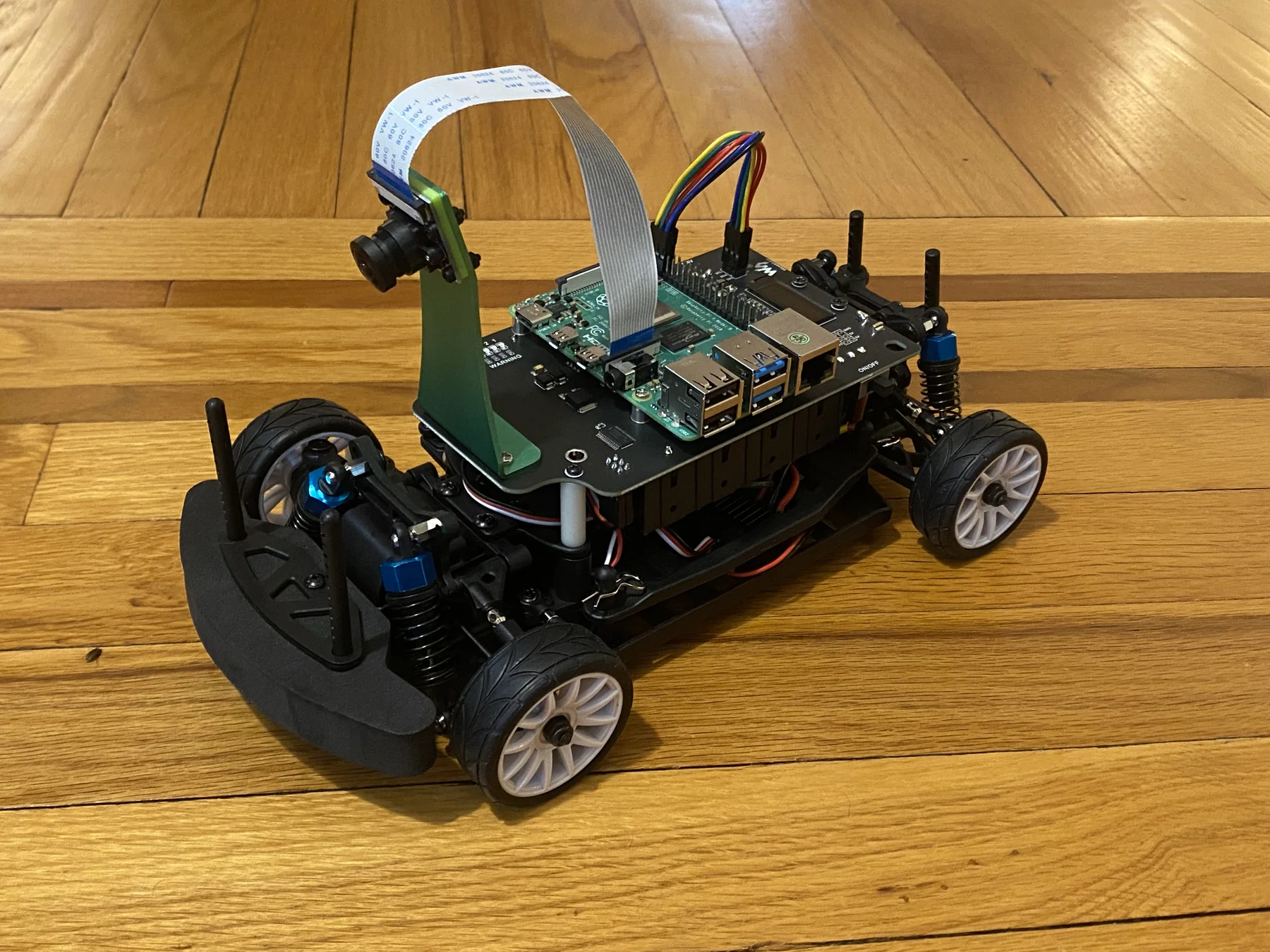
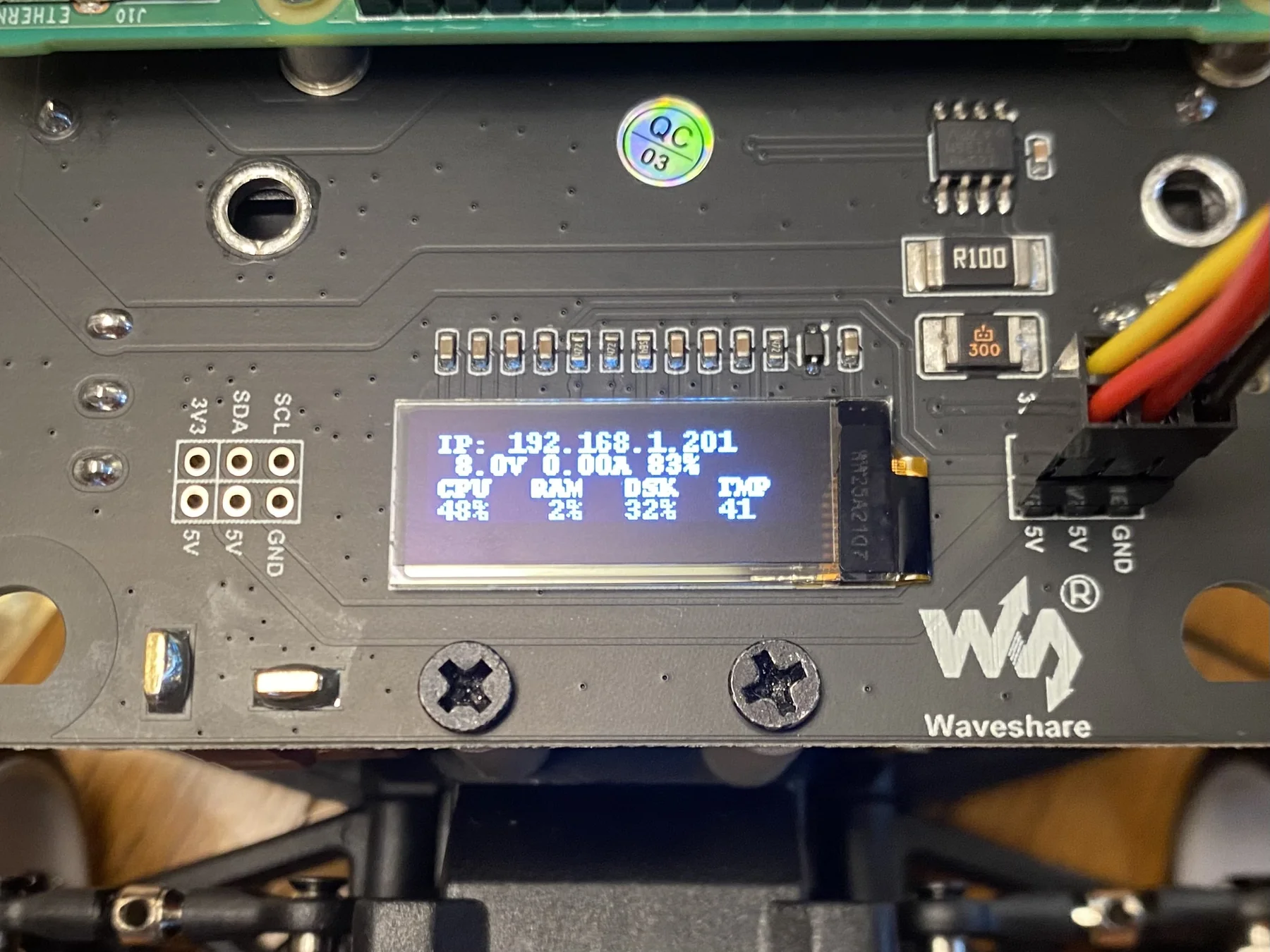
From a working car to a repeatable test.
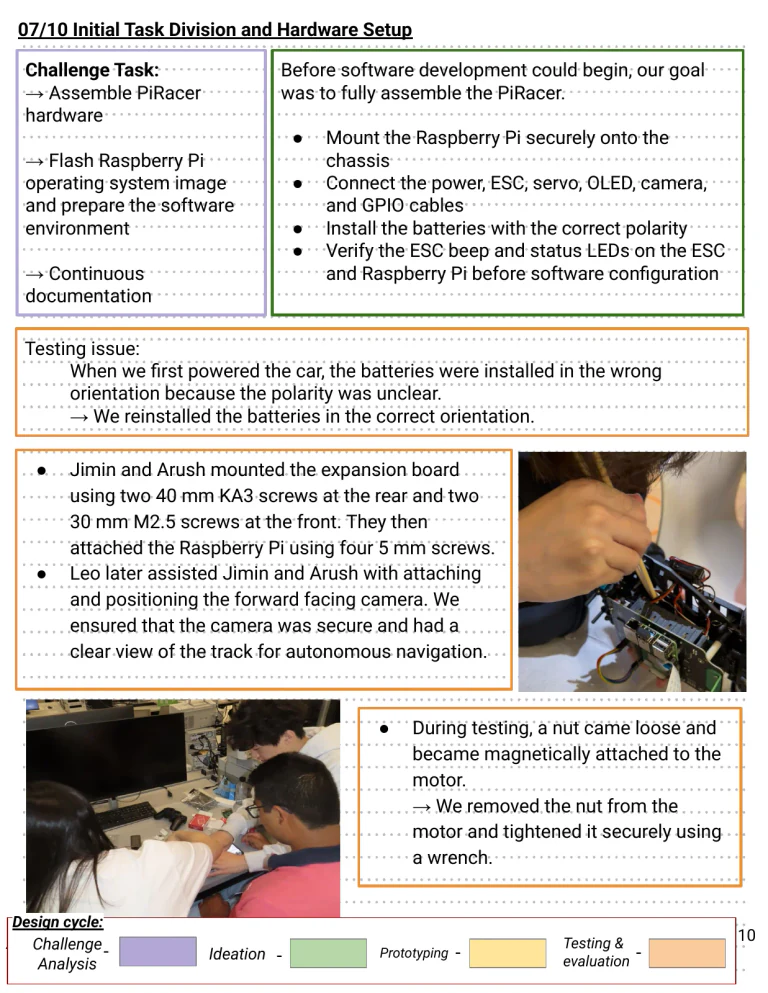
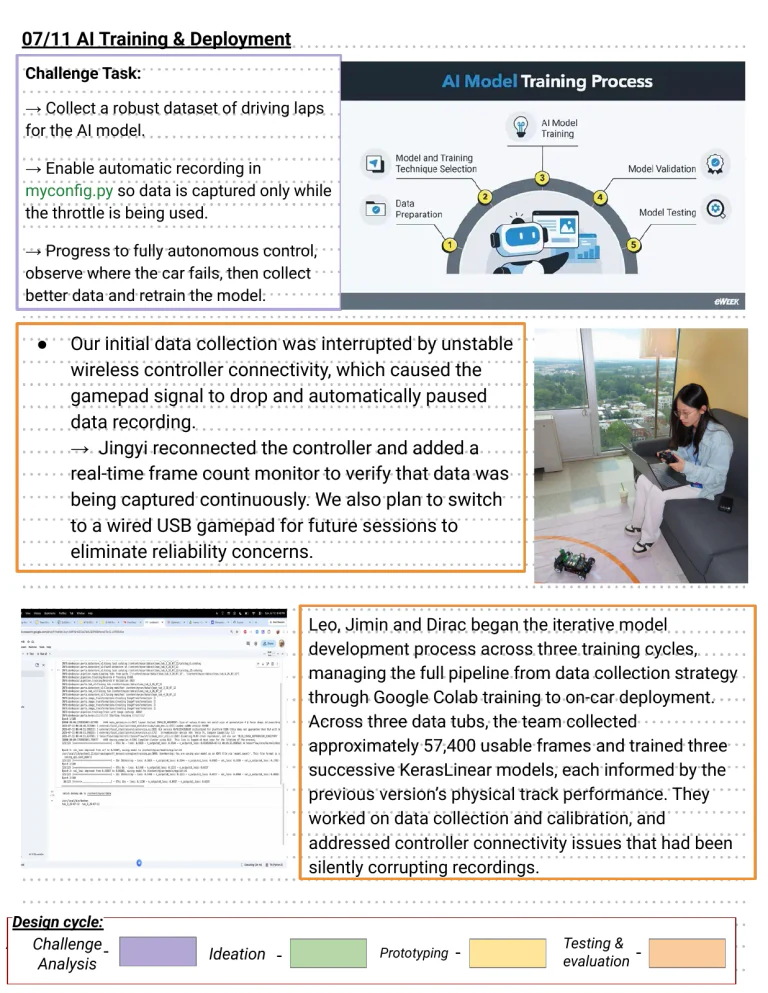
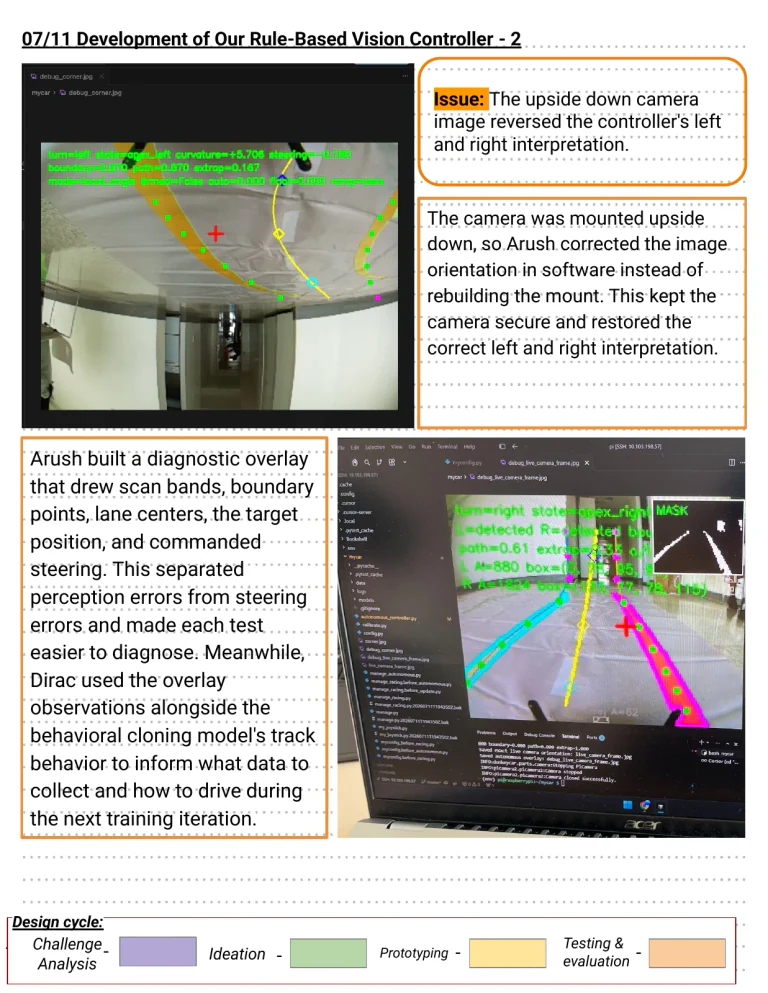
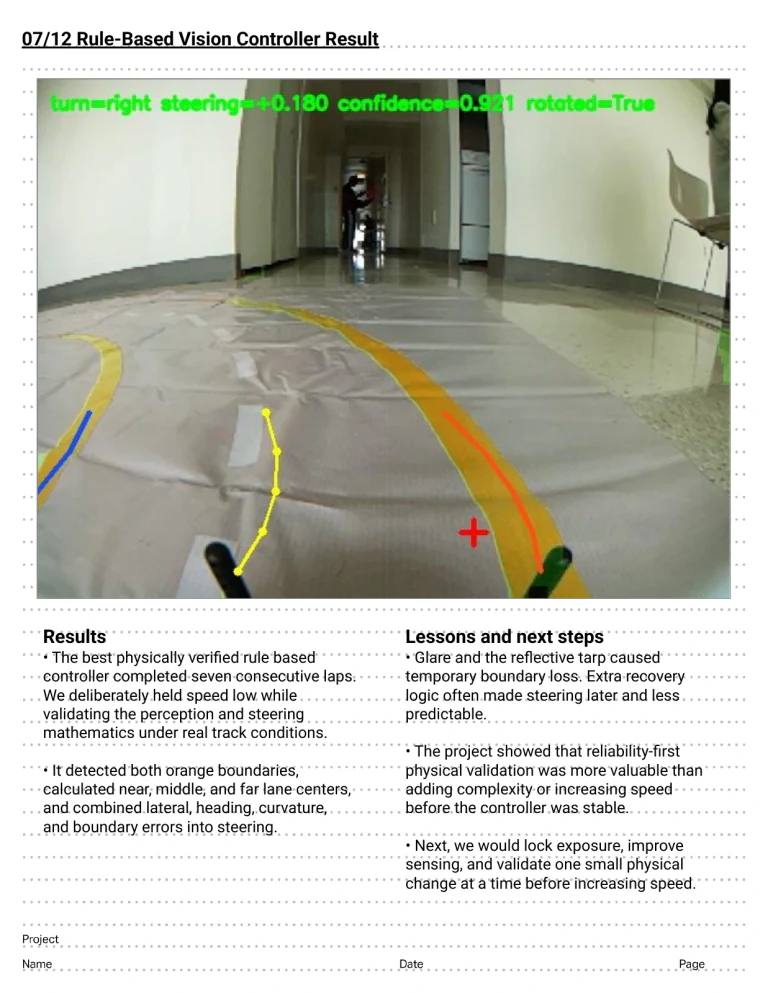
Our team assembled a Raspberry Pi–based PiRacer, resolved power and steering issues, and tested two approaches to autonomous driving: learning from human demonstrations and following colored track boundaries with explicit vision rules.
I configured the OLED display, documented calibration, helped restore the controller connection, and added a live frame counter to confirm that training data was being captured. I also measured the track with the team.
Across three training rounds, we collected approximately 57,400 frames and refined our driving demonstrations. Under controlled lighting, the final learned model completed 20 laps with zero to one interventions. Reopening the windows reduced performance again, showing how strongly reliability depended on the physical environment.
- 3 rounds
- Training and track testing
- ≈57,400 frames
- Team training dataset
- 20 laps · 0–1 interventions
- Learned model · Controlled lighting
A successful run is the beginning of another question.
The car made the need for iteration unavoidable. A working connection or a completed training run could not tell us whether the whole system would behave reliably. We had to consider the camera input, demonstrations, controller, and physical environment together.
The change in performance when the lighting changed was especially useful. It pushed us beyond asking whether the model had learned the track to asking which conditions made that learning dependable. Comparing failed attempts and refining the next test became as important as the successful laps.
Project report / 19 pages
Inside the experiment.
04 / Mirra / AI wellness mirror
An everyday object. A new way to notice change.
Building an everyday wellness product, together.
Our final team project, Mirra, is an AI-powered wellness mirror that tracks visible changes through repeated scans. Professor Siddharth Deliwala nicknamed it “the magic mirror”.
Mirra gave our five-person team a shared setting to connect engineering with a business model.
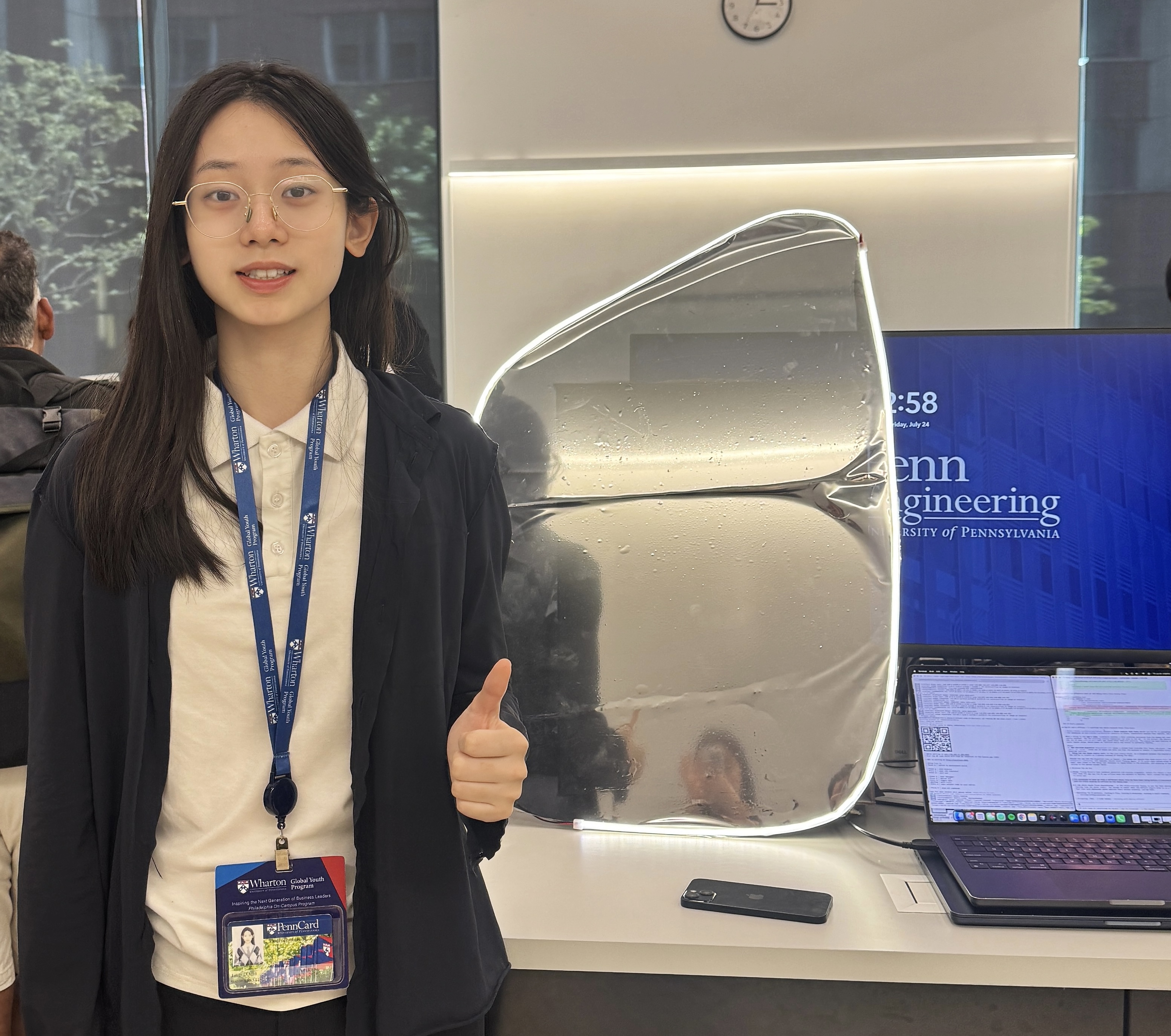
Put the sensing where the routine already happens.
We asked whether an ordinary object could support a useful daily habit, then developed a prototype and companion app around that need. As the product took shape, we considered who might choose it and how we could bring it to them.
Instead of asking someone to remember a wearable or take another selfie, it fits image capture into an existing morning or evening routine.
We designed it for everyday wellness tracking. The app presents changes and trends rather than diagnosing medical conditions.
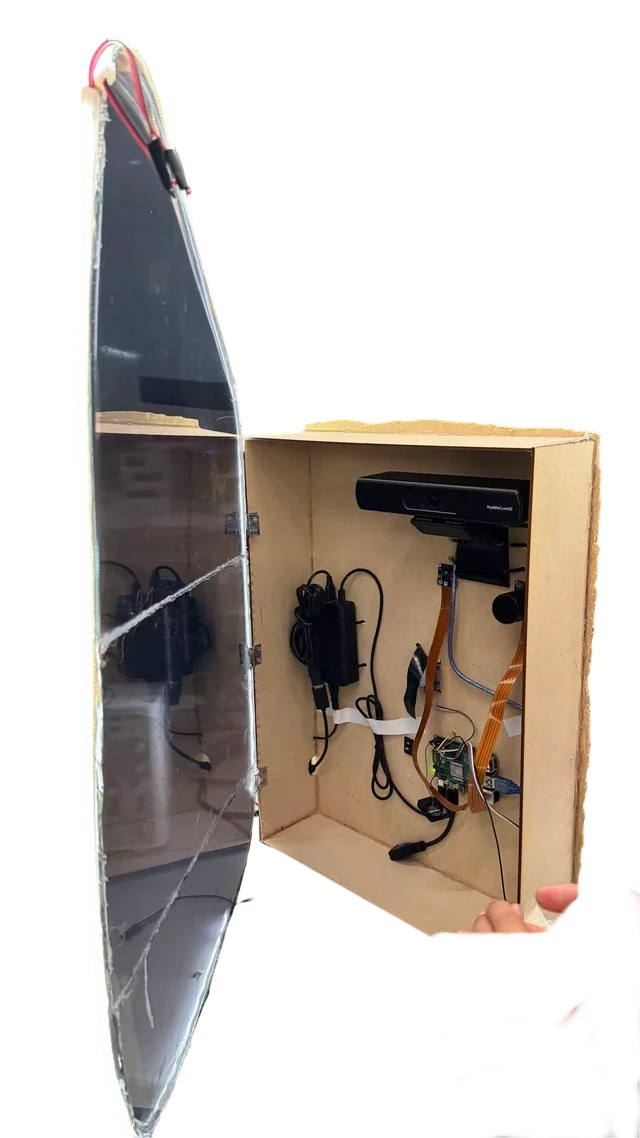
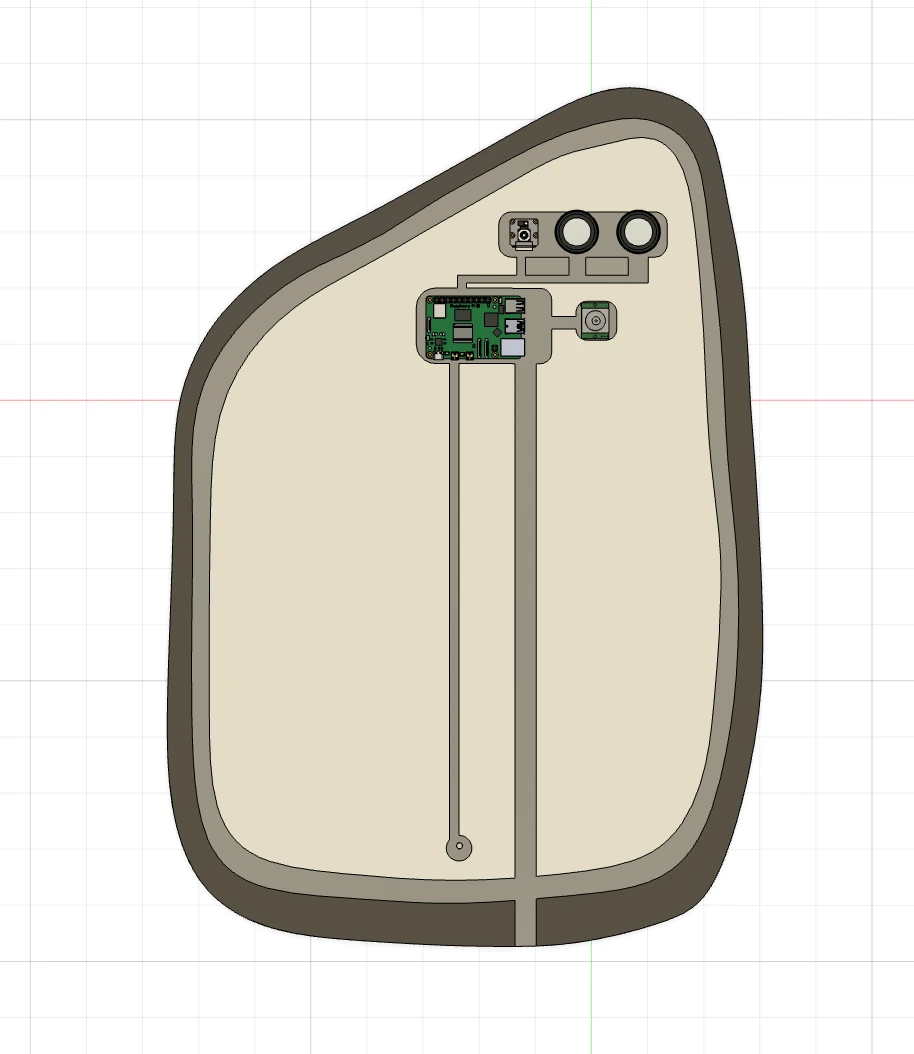
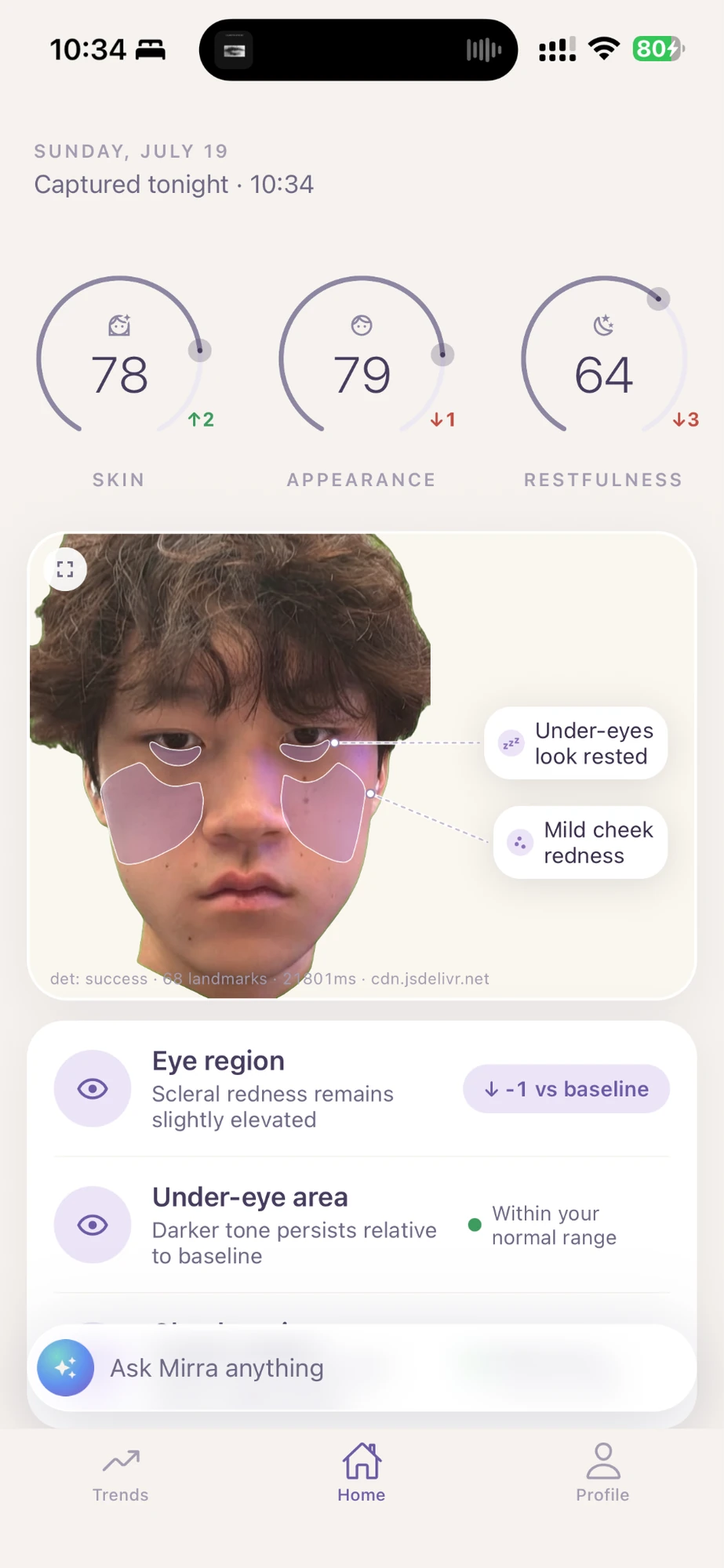
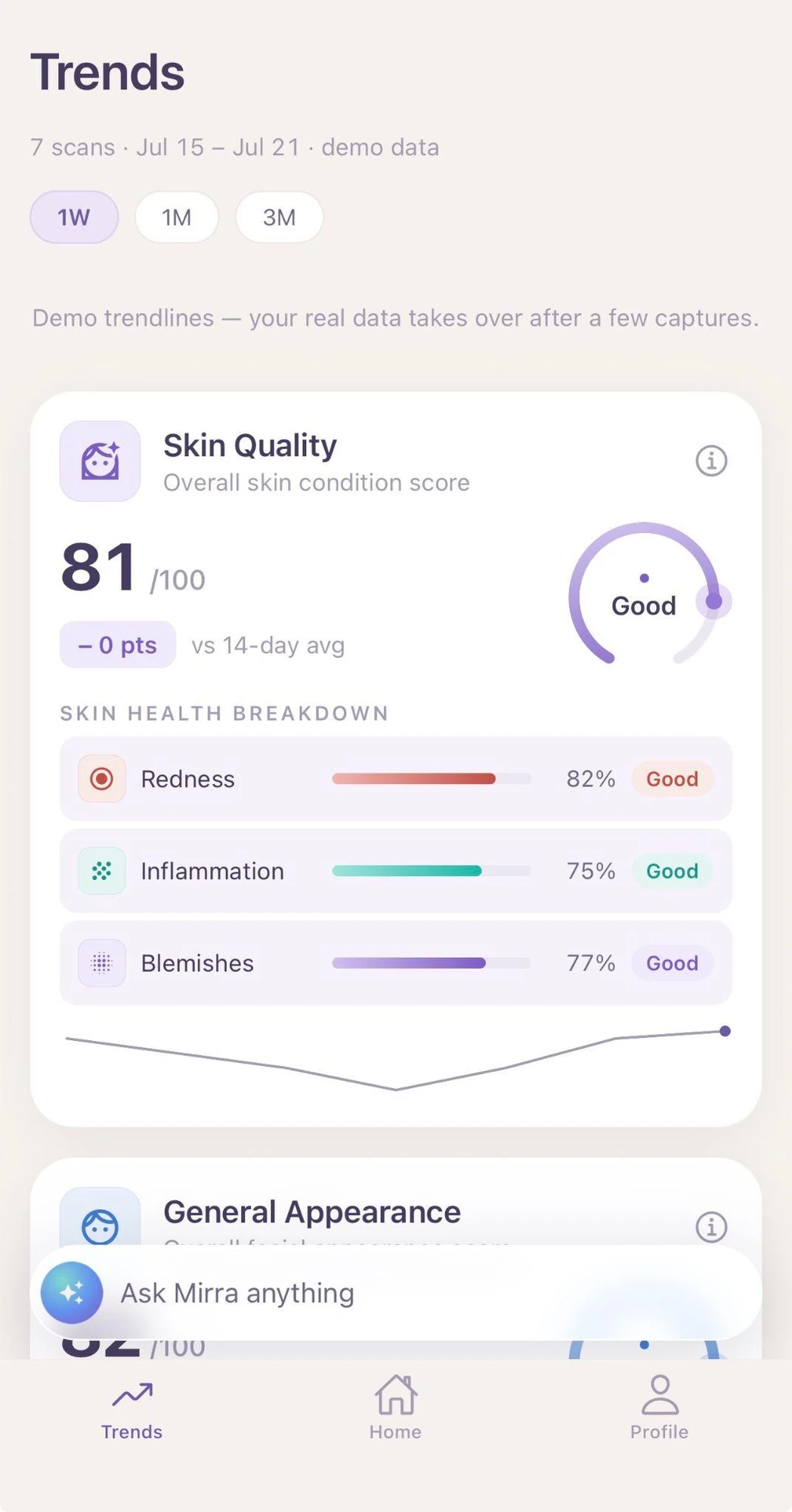
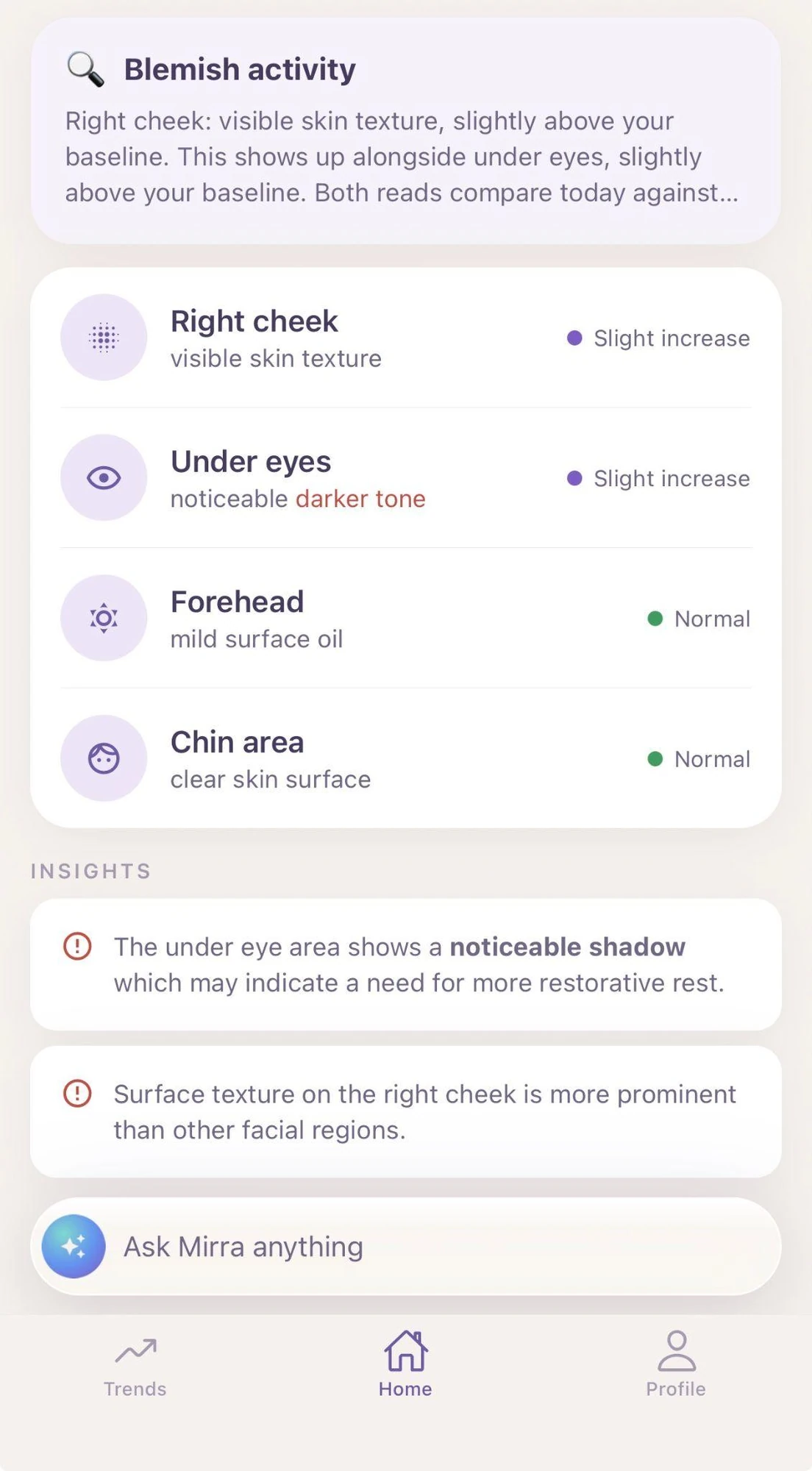
From the mirror to the interface.
We designed the hardware, capture process, and app as one product experience. Our prototype approach combined multiple cameras, controlled lighting, polarization, presence detection, and computer-vision alignment. We aimed to make repeated captures more consistent so that one scan could be meaningfully compared with the next.
We developed the image-capture pipeline alongside the physical prototype. The app compares changes against the user’s own baseline and presents trends in facial appearance. That connection mattered: the information on the phone depended on the conditions in which the mirror captured an image.
A product needs a credible route to market.
Customer conversations and market research developed alongside the prototype. I worked with my teammates to connect product positioning and pricing with a proposed go-to-market plan and a five-year financial model. This gave us a way to examine both the reasons someone might choose Mirra and the costs of delivering it.
Our 49-response survey helped define the first audience: 49% of respondents ranked skin health as their highest wellness priority. We focused the initial positioning on students already investing in skincare, with standardized daily capture as the central benefit.
Our plan proposed a $499 direct-to-consumer device with core features included, plus an optional $8.99 monthly subscription. It connected marketing spend and customer acquisition with conversion, retention, and the cost of serving each customer.
Making an innovation sustainable is part of the design.
Our five-year model projected 283 new customers in Year 1 and 5,979 in Year 5, with acquisition-funnel budgets of $73,000 and $585,000. The corresponding modeled acquisition cost fell from approximately $258 to $98. These were planning assumptions to test, not sales achieved; the funnel budget excluded general marketing expenses and salaries.
- 5 years
- Financial planning horizon
- 49 respondents
- Customer discovery survey
- $499 + optional subscription
- Proposed business model
05 / Beyond the classroom / Google & Morgan Stanley
How a product grows into a company.
At Google: taking AI beyond the prototype.
An AI product panel at Google added a perspective beyond the laboratory: how do AI products move from a technical demonstration to something people use at scale? The visit connected our coursework in product development and technology strategy with the decisions behind reaching a wider audience.
For Mirra, that question joined an existing line of inquiry from my water-purifier work. A prototype makes an idea tangible; understanding the user, the value offered, and the organization needed to deliver it helps define what comes next.
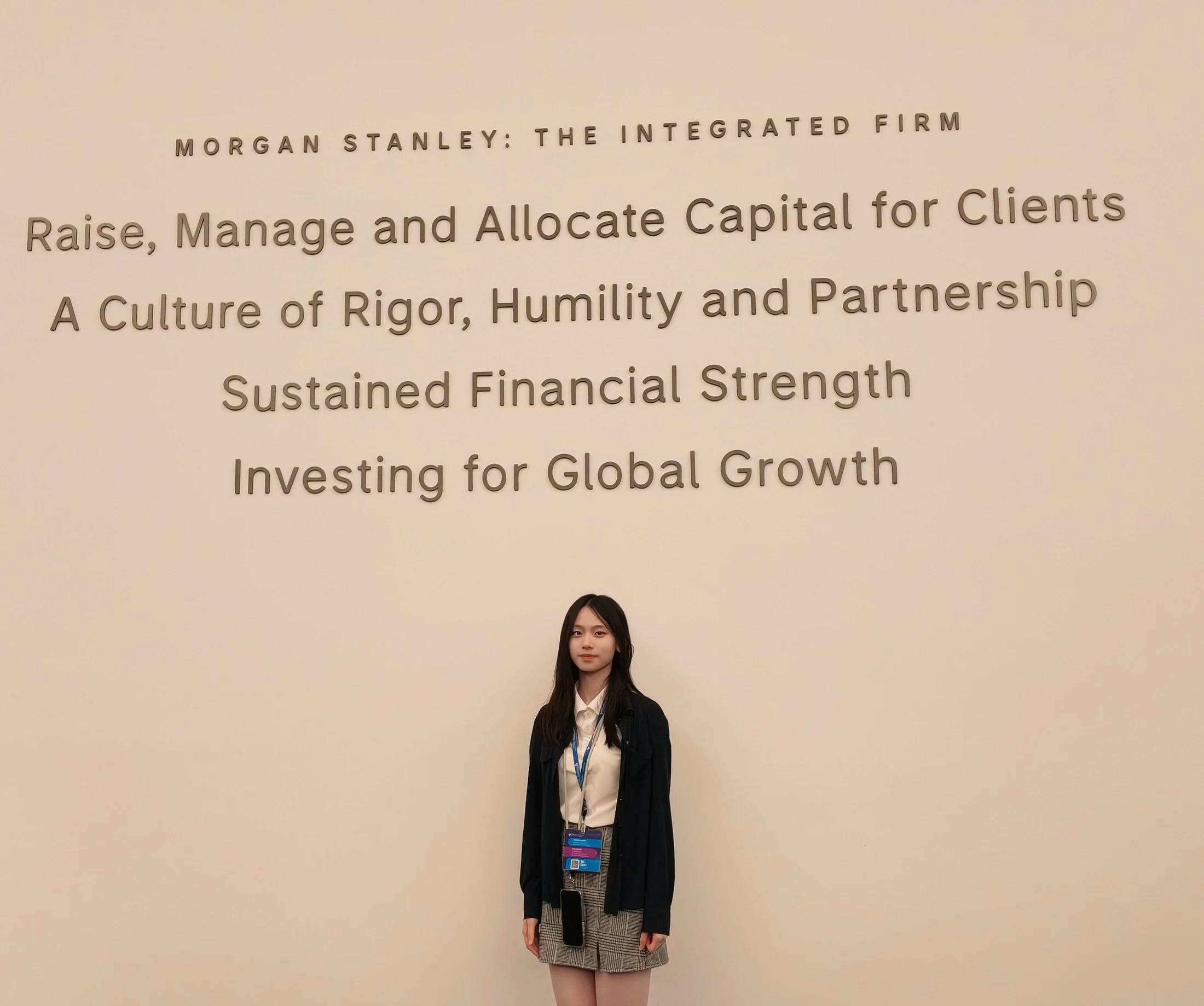
At Morgan Stanley: working through an IPO.
At Morgan Stanley, we participated in a simulation of Google’s IPO. The exercise brought pricing strategy, investor demand, fundraising, dilution, and founder control into the same set of decisions.
It made the trade-offs in financing more concrete. Raising capital can help a company grow, while the terms also affect ownership and control. Evaluating those choices required us to consider the company’s plans alongside the expectations of its investors.
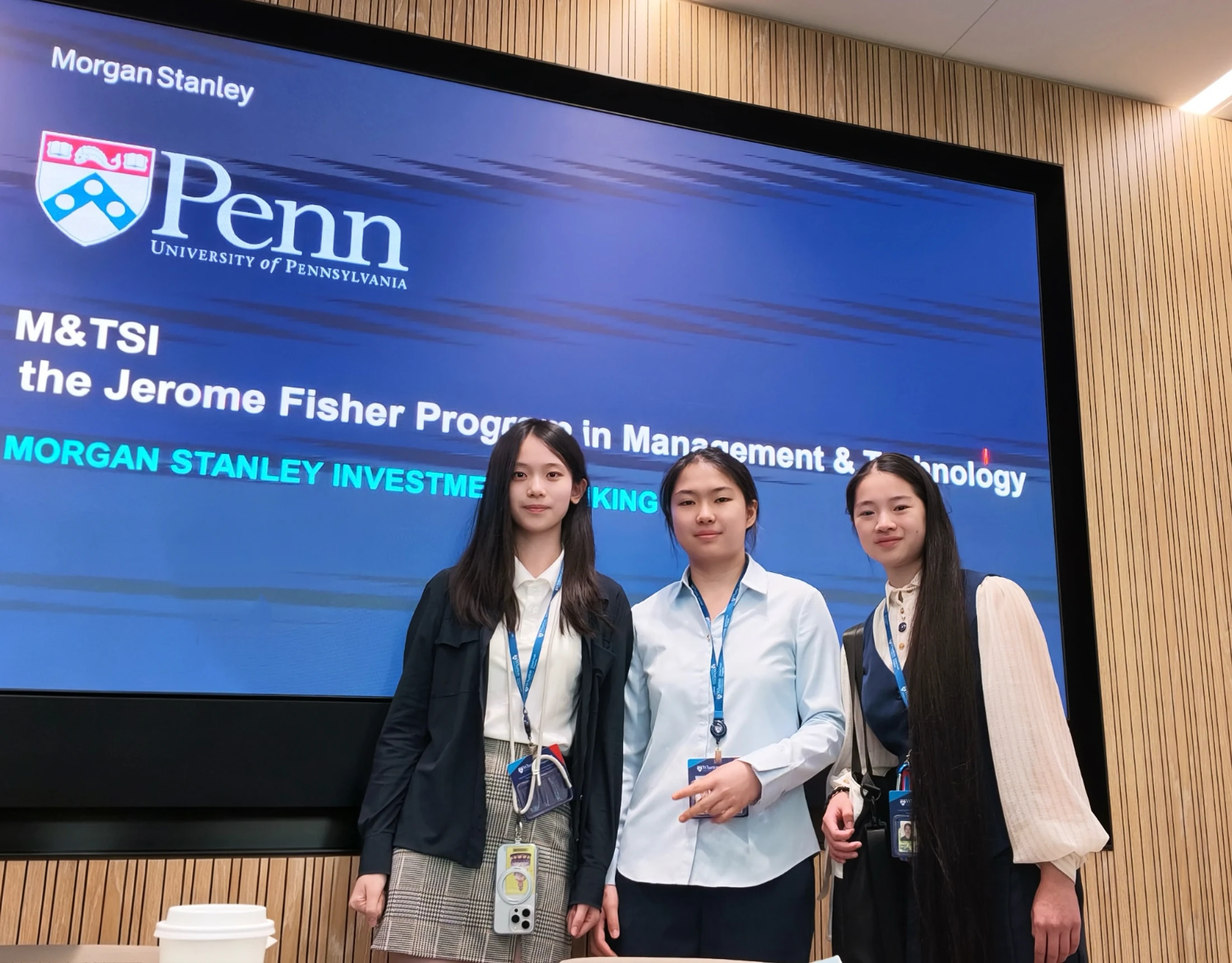
Connecting finance with product decisions.
The Morgan Stanley activity gave another context to the financial modeling we were doing for Mirra. Customer demand, the resources needed to serve it, and the way a company funds its growth are connected questions.
Studying those connections with fellow students helped me look beyond whether an invention could work. I wanted to understand what would allow the people and organization behind it to keep improving it.
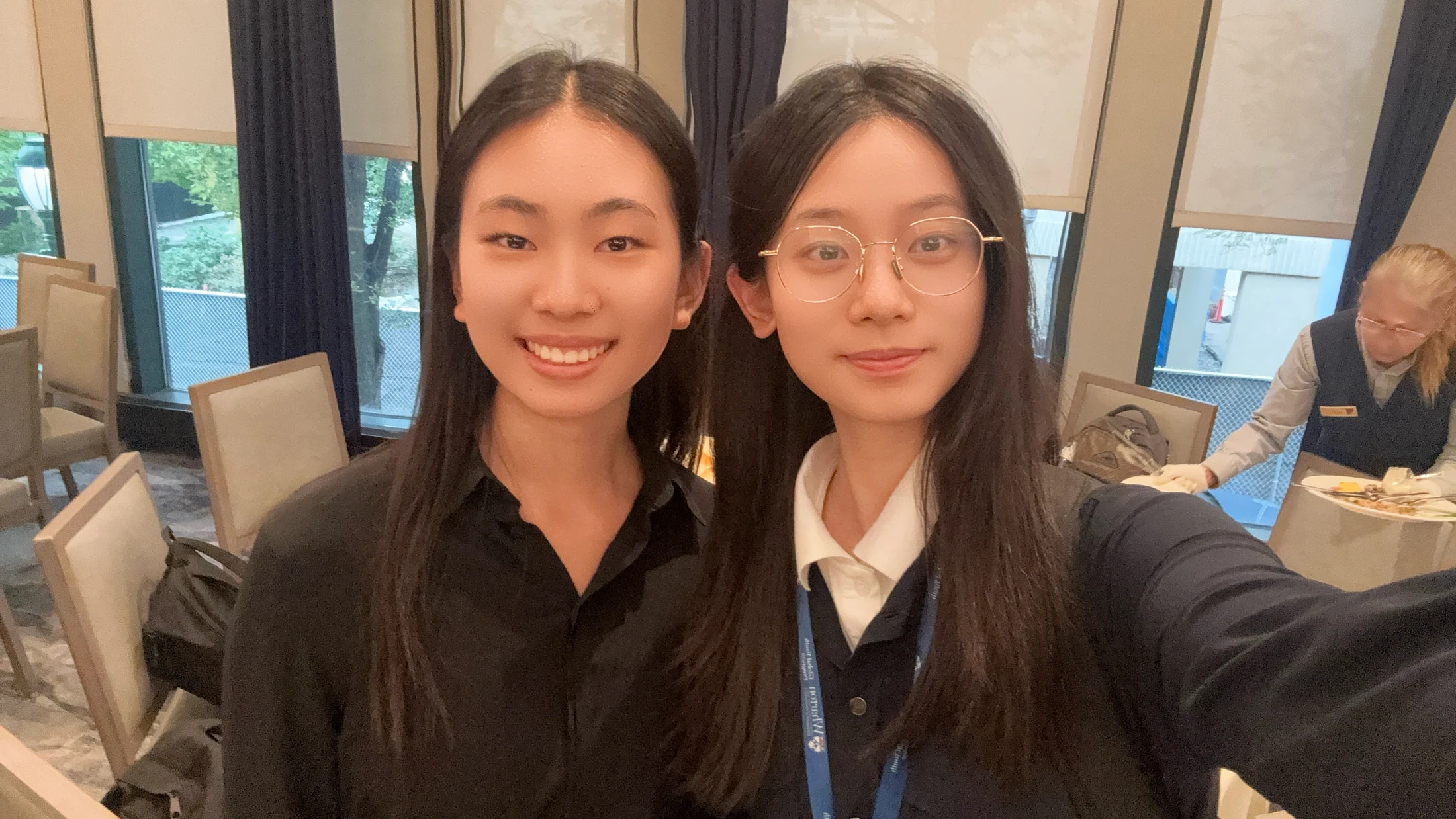
Learning to ask better questions, together.
Across the labs, case discussions, company visits, and final project, the most useful habit was learning to ask a more precise question. What did a failed test reveal? Which assumption was still untested? How would a customer or teammate see the same decision?
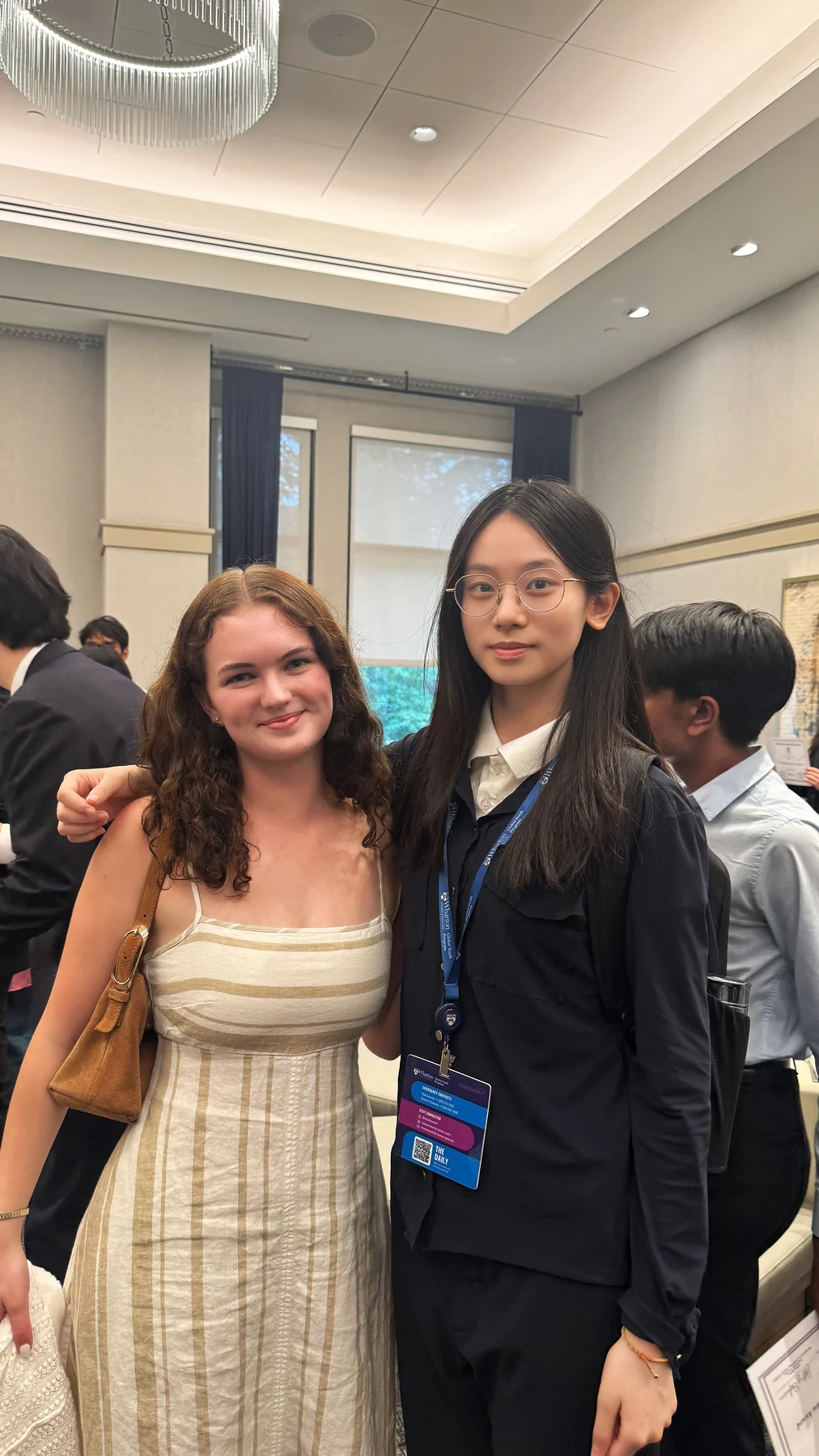
The people beside me were part of that education. Sharing the work, comparing approaches, and making time for conversation turned an intensive three weeks into friendships and a stronger way of working with others.
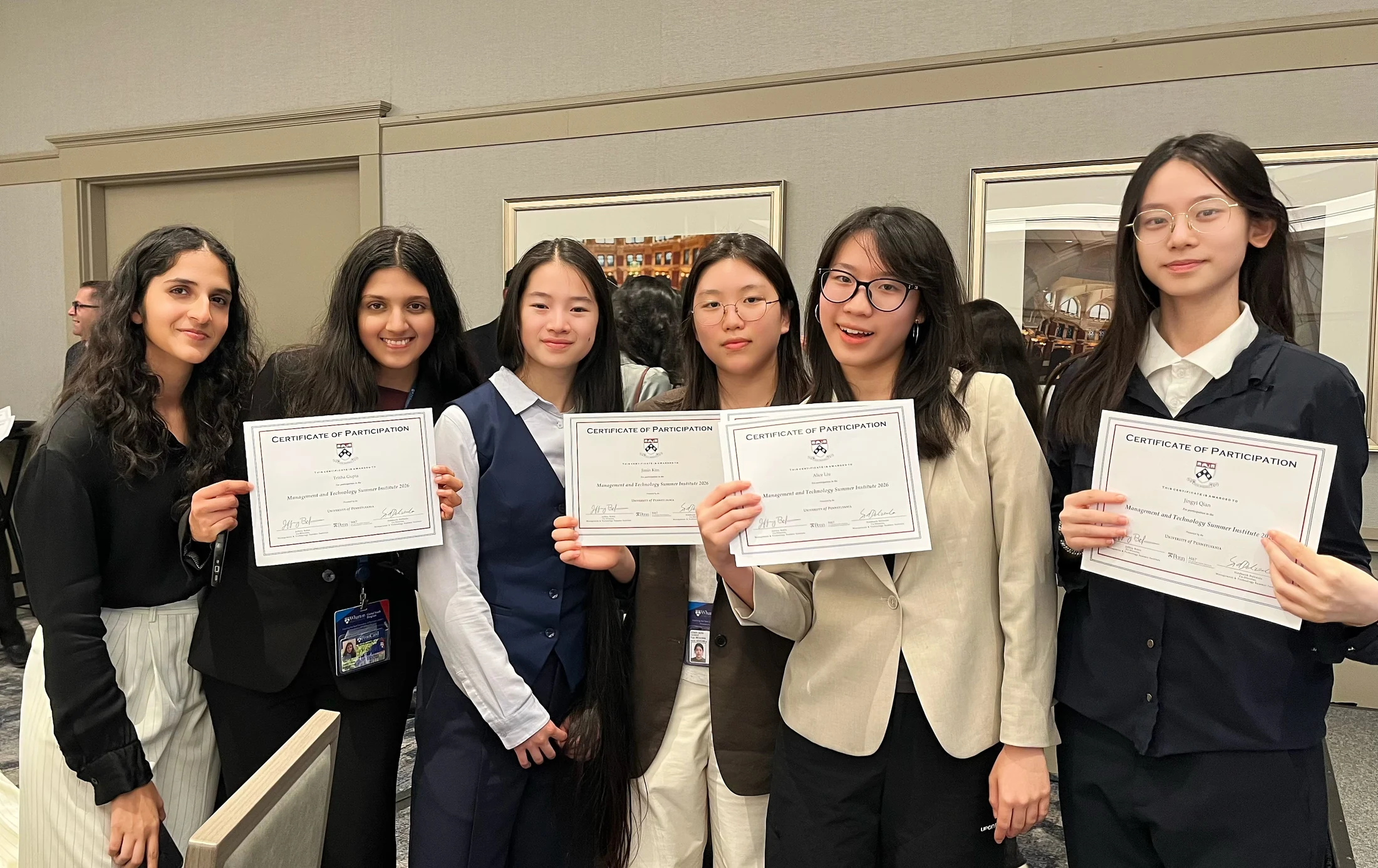
M&TSI / Summer 2026
Completing the summer together.
I left M&TSI with a stronger process for work I had already begun through my water-purifier project: develop the technology, understand the people who might use it, and test a business model that could sustain it. Building Mirra with my teammates and learning beyond the classroom deepened that practice.